
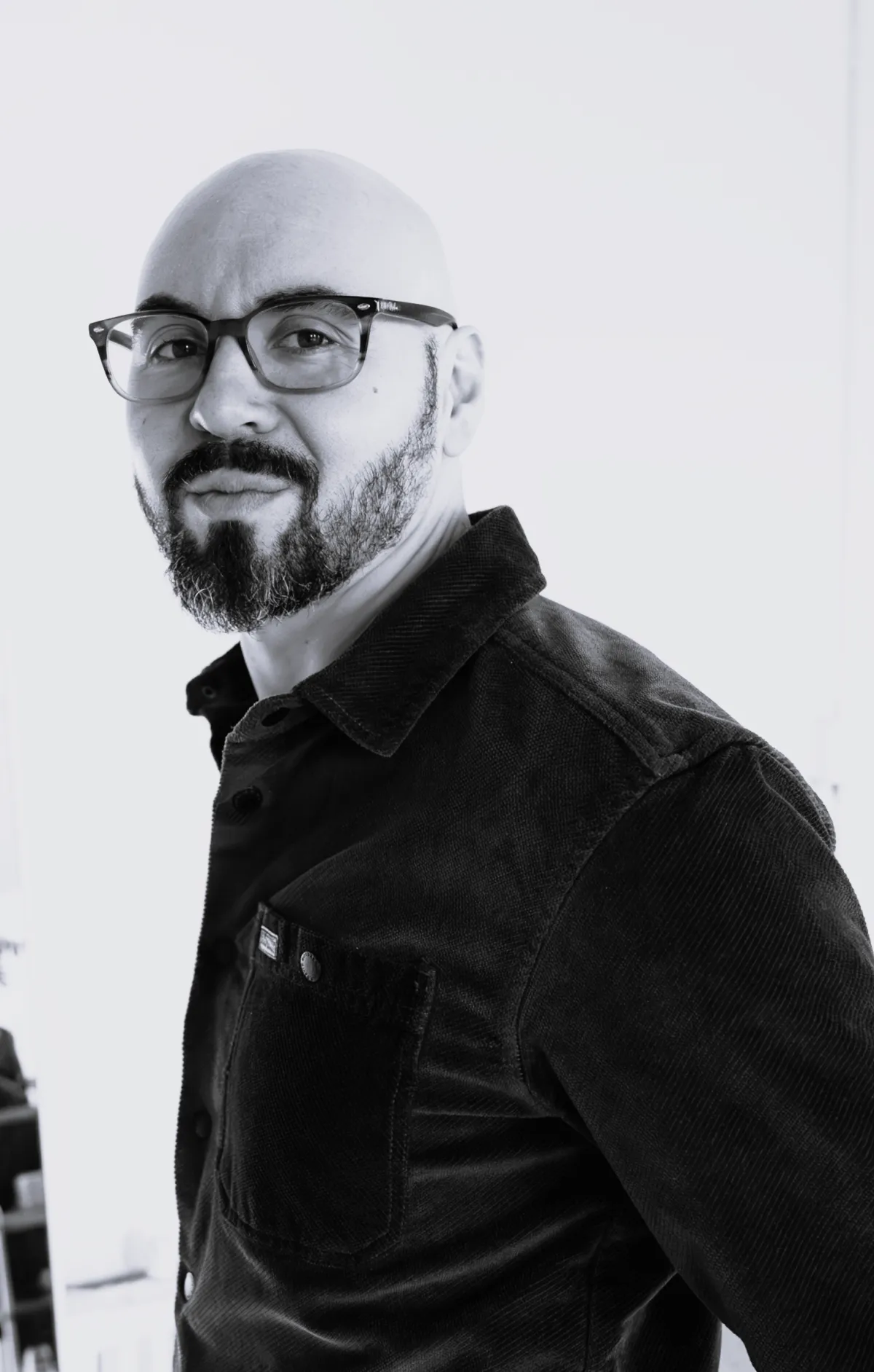
Meet Your Business Value & Exit Maker
Markian Pergat | Value & Exitability Advisor
Advisor to owner operators
Investor in service businesses
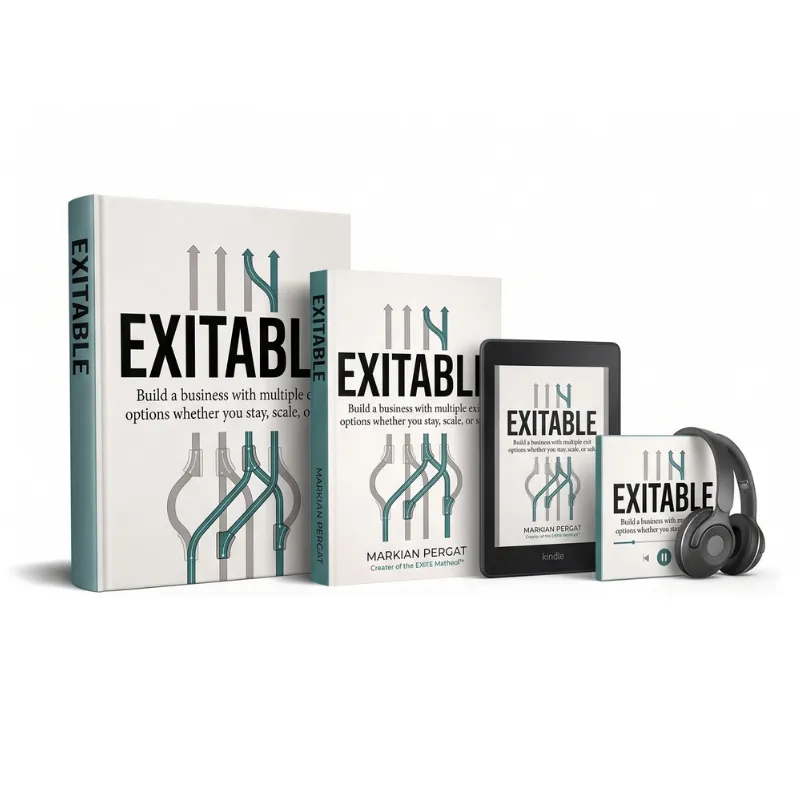
Author of EXITABLE
Creator of the EXITS Method™
I'm Markian Pergat, an entrepreneur, small business investor, and advisor to established service business owners.
I’ve built and operated service businesses, invested in businesses, negotiated deals, and worked with owners to make their businesses more valuable, transferable, and less dependent on them.
Through my advisory work and proprietary EXITS Method™, I help owners de-risk what they’ve built, create more freedom, and build options for what comes next.
My big picture is to help small business owners preserve what they’ve built, retire with pride, and leave their businesses in a position to continue creating value without them.
Get a copy of my book
If you like how I think and want to learn more about freedom, space, and exitability for small business owners, pick up a cover of my book EXITABLE.
Get the sample chapters right away while you wait for your hard copy to get shipped to you.
I Think Differently
I'm not a business coach or an "exit planner".
I'm a business value, strategy, and exitability advisor for established owner-operated businesses whose owners are approaching a point where the business needs to become less dependent on them.
Think of me of your thinking partner who sees things from multiple perspectives. I actively own and increase value in businesses. I acquire, invest, or partner in businesses that I like work well with. I bring dealmaking and negotiating experience from my time as an intermediary.
And I bring all those hats to my advisory where I build traditional service business value while removing its owner from of the day-to-day or getting stuck in operations.
I have an unusual combination of strengths...
I think like an owner with operator experience, not an academic.
I've actually built and operated service businesses, hired and fired employees, generated leads from scratch, increased margins, delegated, built systems, served customers, and the messy realities of ownership. My strongest insights tend to come from things I've tried, and what actually happend as a result of them.
I naturally diagnose systems.
A lot of my thinking goes beyond “how do I fix this problem?” to “why is this business structured this way in the first place?” That is exactly what an owner investing in 1:1 advice needs.
I'm see second and third order consequences.
I repeatedly come back to questions like:
If you disappeared tomorrow, what happens?
If this revenue disappeared, what happens?
If the business was being bought, what would the buyer see?
Does this actually create value, or merely make the owner work harder?
That is advisory thinking.
I've built frameworks to use again that work in bespoke situations.
I've spent the time developing the EXITS Method™, the Exitability Scorecard™, idividual Value Lever frameworks, etc.
I naturally organize messy business situations into understandable models.
That is valuable to owners because I can diagnose your individual company without reinventing the wheel for every problem, while still advising on exactly your situation in a customized way.
Work with Markian
I work with a small number of small business owners at a time and open up new availability three or four times per year.
For 1:1 implementation, visit the EXITS Advisory website for availability and suitability.
From Owner-Dependent & Unsellable → To Transferable with Options
Most businesses aren’t sellable.
Not because they lack profit, but because they depend too heavily on the owner.
This was mine.
I hated my business.
I was overworked, exhausted, and finally had enough.
Done with it.
Done with picking up and dropping off supplies between job sites.
Done with driving across the city to be the fastest to give quotes to new prospects. And done with ending my day only when stores were closed and it was too late to go to customers' houses.
Physically drained after a 15 hour day, I'd come home at 10pm and pray there was something ready-to-eat (and still edible) in the mini-fridge to give me sustenance.
With whatever energy I had left, I threw myself at my laptop and reluctantly started replying to emails I missed from the day in an attempt to keep up some form of reasonable customer service response times.
By the time I was at "inbox zero" (or as much as I could manage before dozing off), I'd crash out between 1 or 2am, sometimes still wearing the same shirt saturated with sweat and sawdust from earlier that day.
It's highly unlikely I rolled over even once in the night, partly from my depleted body's exhaustion, but more accurately because there was no room to rollover on the couch where I slept at my buddy's apartment.
Only get up and do it all over again the next day. Only the higher powers know how I didn't sleep through my morning alarm clock buzzer.
By some miracle, I lived less than 10 minutes away from the supply store, so I could roll off the couch and make it by 7am store opening before the lineups were too long.
Notably, there was not enough time for the bags under my tired eyes to clear out.
And this was how I existed in the early years of my business.
Until I had finally had enough.
So I pulled into the parking lot of the local business brokerage feeling complete relief.
Relief that I had found my escape from the business I had built.
And hated.
Only there was no relief.
Because I didn’t have a real business.
Systems were lacking.
A buyer wouldn’t be able to expect the same results I got.
And if they did, they’d have to work as much as I did doing tasks and roles that a business owner shouldn’t be doing.
...which no buyer would in their right mind do.
The only chance at selling would be a competitor buying my customer list and equipment to gain more market share.
I wanted to feel relief.
And instead I felt defeated.
Defeated that I had built what I thought was a business that I could not sell.
But this tough truth was exactly what I needed to hear to make some serious decisions.
It was the catalyst that got me thinking differently about my business and my role in it. It made me realize that my business is an asset that I own.
And my most important job as a business owner was to make that asset more valuable. I needed to build business systems. And the results had to be transferable to another buyer.
It didn’t happen overnight, but from that moment on, every decision in my business had to run through the filter of:
“Does this make my business more valuable?”
And a few short years later, I had created a valuable, transferable, desirable asset of my business.
Then something strange happened.
Looking back, it’s incredibly obvious. But I didn’t realize it until it already happened.
I put in all that effort, spent years building up, and pulled the levers that yielded the most business value.
And it was all for the idea of being able to drive back to the broker in town to show what I had done.
To finally sell.
And now that I had exitability available to me…
I didn’t want to sell anymore.
Before
Everything ran through me
No systems
Long hours, constant decisions
Burnout
Not sellable
After
Runs without me
Systemized operations
Automations, delegated execution
Predictable performance
Transferable asset (exitized business)
I hated my business.
It's true.
Not because it wasn’t working, but because it depended entirely on me.
Everything bottlenecked through me.
There were no real systems. No separation between me and operations.
It wasn’t a business. It was a job I couldn’t step away from.
Eventually, I decided I was done.
I went to a business broker to sell.
I expected relief.
Instead, I got the truth I didn't want to hear:
The business wasn’t sellable.
Not because it wasn’t profitable.
But because it depended entirely on me.
A buyer wouldn’t be buying a business.
They’d be buying a job.
And that realization changed how I saw everything.
My business wasn’t just something I worked in.
It was an asset I owned.
And my job wasn’t to stay busy.
It was to make that asset more valuable.
From that point forward, every decision ran through one filter:
Does this make the business more transferable, valuable, and exitable?
I didn’t try to “grow faster.”
I focused on removing dependence.
The goal wasn’t to work less.
The goal was to make the business work without me.
A few years later, the business had fundamentally changed.
It no longer relied on me to operate.
Work continued without my involvement.
Performance was consistent and repeatable.
A new owner would achieve the same results I leave.
I could step away for vacation during the peak season without disruption.
Selling was now an option.
I built the business to sell it.
And once I could…
I didn’t want to anymore.
Because for the first time I had freedom.
I had control.
I had options.
And I had exitability.
The business no longer owned me.
Most owners think they need more growth before they can exit.
In reality, they need less dependence.
A business becomes valuable when it can operate without the owner.
That’s what makes it sellable.
If your business depends on you to operate, relies on you for decisions, and slows or breaks down when you step away, it's not exitable.
And when the time comes, that will limit your options.
If you want to understand how exitable your business actually is:
Apply for an Exitability Diagnostic
A working session to identify:
where your business depends on you
what’s limiting transferability
what to fix first